MT4 after twenty years: an honest take on the platform
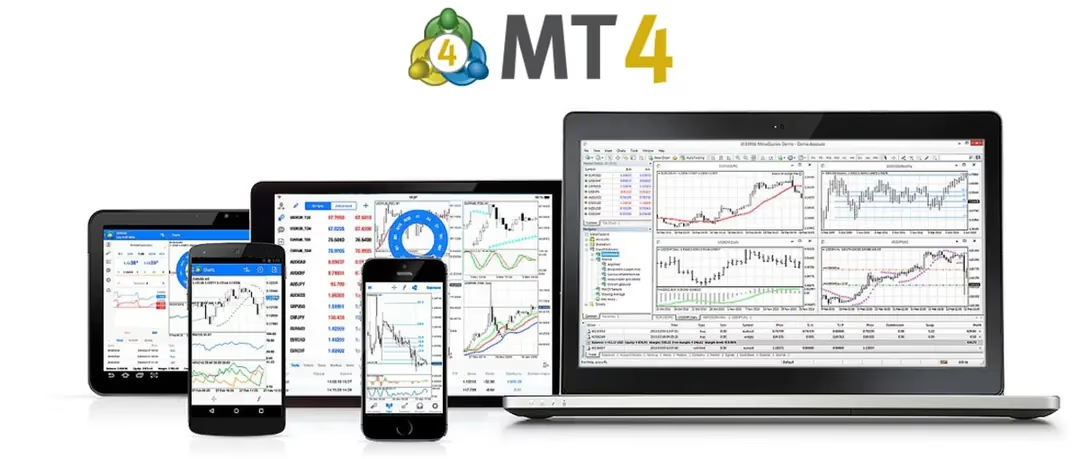
Why traders still pick MT4 over newer platforms
MetaQuotes stopped issuing new MT4 licences years ago, steering brokers toward MT5. Still, most retail forex traders kept using MT4. The reason is straightforward: MT4 works, and people trust what works. Thousands of custom indicators, Expert Advisors, and community scripts run on MT4. Migrating to MT5 means rebuilding that entire library, and the majority of users would rather keep trading than recoding.
I spent time testing MT4 and MT5 side by side, and the differences are smaller than you'd expect. MT5 has a few extras including more timeframes and a built-in economic calendar, but the core charting feels about the same. If you're weighing up the two, MT4 is more than enough.
Setting up MT4 without the usual headaches
Installation takes a few minutes. What actually causes problems is the setup after install. By default, MT4 shows four charts squeezed onto the screen. Clear the lot and open just the pairs you care about.
Templates are worth setting up early. Set up your usual indicators on one chart, then save it as a template. Then you can load it onto other charts without redoing the work. Small thing, but over months it makes a difference.
A quick tweak that helps: go to Tools > Options > Charts and enable "Show ask line." By default MT4 displays the bid price on the chart, which makes entries appear wrong by the spread amount.
Backtesting on MT4: what the results actually mean
MT4 comes with a backtester that allows you to run Expert Advisors against historical data. But here's the thing: the reliability of those results comes down to your tick data. The default history data is modelled, meaning the brokers using mt4 tester fills gaps using algorithms. If you're testing something that needs accuracy, grab real tick data from a provider like Dukascopy.
Modelling quality is more important than the profit figure. If it's under 90% suggests the results aren't trustworthy. I've seen people post backtest results with 25% modelling quality and ask why their live results don't match.
The strategy tester is one of MT4's stronger features, but the output is only useful with quality tick data.
Custom indicators on MT4: worth the effort?
MT4 comes with 30 standard technical indicators. Most traders never touch them all. That said, the platform's actual strength lives in community-made indicators written in MQL4. You can find over 2,000 options, ranging from basic modifications to elaborate signal panels.
Installing them is straightforward: copy the .ex4 or .mq4 file into your MQL4/Indicators folder, refresh MT4, and the indicator shows up in the Navigator panel. One thing to watch is reliability. Free indicators are hit-and-miss. A few are well coded and maintained. Others stopped working years ago and can freeze your terminal.
Before installing anything, check how recently it was maintained and whether people in the forums mention bugs. A poorly written indicator won't just give wrong signals — it can slow down the whole terminal.
The MT4 risk controls you're probably not using
MT4 has several built-in risk management features that the majority of users never configure. Probably the most practical one is the maximum deviation setting in the order window. It sets the amount of slippage you'll accept on market orders. If you don't set it and you're accepting whatever price the broker gives you.
Everyone knows about stop losses, but MT4's trailing stop feature is overlooked. Right-click an open trade, choose Trailing Stop, and define the pip amount. The stop follows when price moves into profit. It won't suit every approach, but for trend-following it takes away the temptation to sit and watch.
You can configure all of this in under five minutes and the difference in discipline is noticeable over time.
Expert Advisors — before you trust a robot with your money
Expert Advisors on MT4 have obvious appeal: set rules, let the code trade, walk away. In reality, the majority of Expert Advisors lose money over any meaningful time period. EAs sold with incredible historical results are often over-optimised — they worked on the specific data they were tested on and break down the moment conditions shift.
That doesn't mean all EAs are useless. Some traders code their own EAs for one particular setup: time-based entries, calculating lot sizes, or exiting positions at set levels. That kind of automation tend to work because they execute mechanical tasks where you don't need judgment.
When looking at Expert Advisors, use a demo account for at least two to three months. Forward testing tells you more than any backtest.
MT4 on Mac and mobile: what actually works
The platform was designed for Windows. Mac users has always been a workaround. Previously was running it through Wine, which mostly worked but introduced display glitches and occasional crashes. Certain brokers now offer macOS versions wrapped around Wine under the hood, which is an improvement but still aren't true native apps.
MT4 mobile, on both iPhone and Android, are surprisingly capable for watching your account and tweaking stops. Serious charting work on a mobile device doesn't really work, but closing a trade on the go is genuinely handy.
Look into whether your broker has real Mac support or a compatibility layer — the difference in stability is noticeable.